
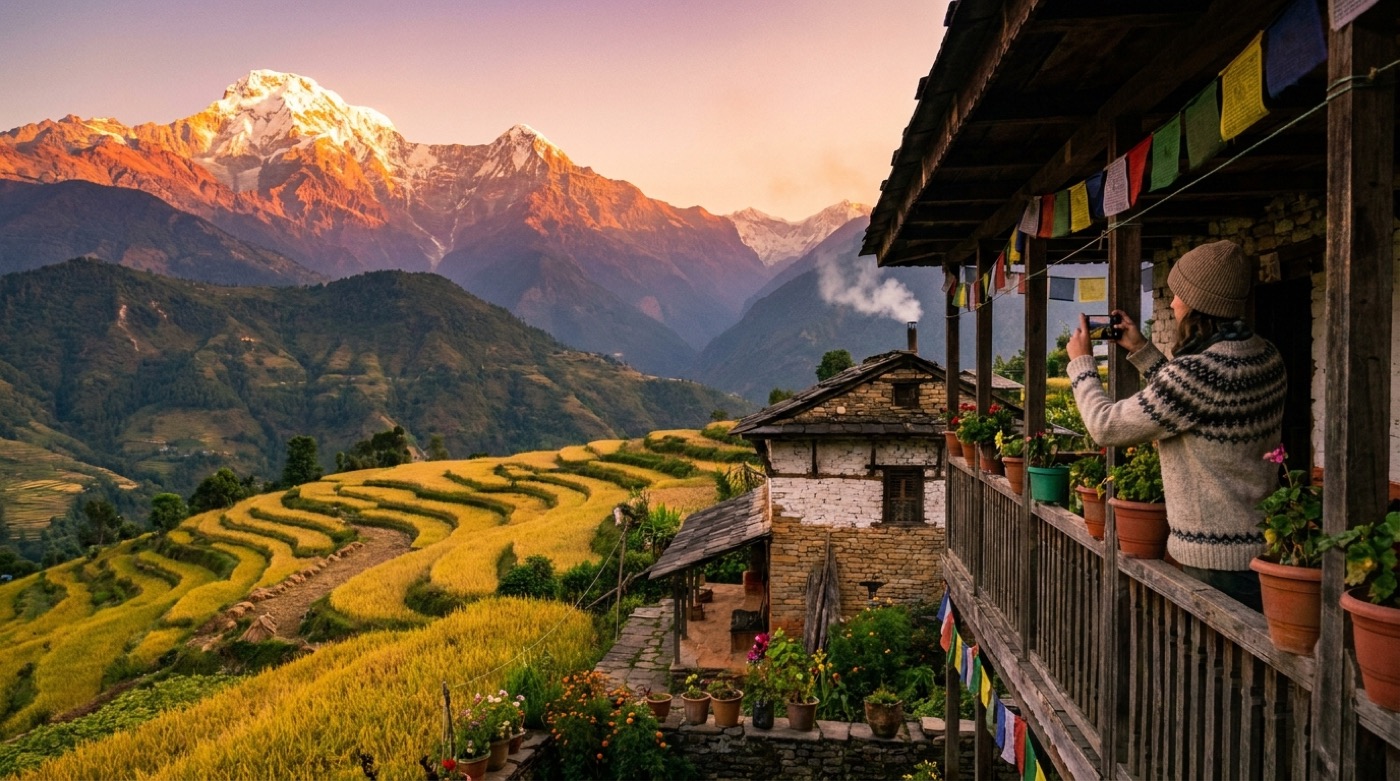
A community homestay in a village outside Pokhara and a large resort in Chitwan are both, in the end, competing for the same traveler's attention on the same Instagram feed. Good resort and homestay marketing is not about matching a big property's budget — it is about showing the experience only your place can offer, in a way that feels real and inviting.
This guide is written for resort managers and homestay hosts across Nepal who want to grow bookings through Instagram without a large team or budget.
Why resort and homestay marketing works differently on Instagram
Travelers researching a homestay or resort are usually not comparing amenities line by line — they are imagining themselves there. A photo of morning mist over the hills, a plate of freshly cooked dal bhat, or a short video of a local festival celebration does more to sell the experience than a list of room features ever could.
This is genuinely good news for smaller properties: authenticity is often more persuasive than luxury, especially to travelers seeking something different from a standard hotel stay.
Content ideas that show off what makes your place unique
- A day in the life: sunrise views, breakfast preparation, a nearby walking trail, and evening tea — strung together as a short reel.
- Local culture moments: a nearby temple, a village festival, or a traditional cooking demonstration guests can join.
- Host or staff introductions: for homestays especially, guests often choose based on how welcoming the host seems in photos and videos.
- Seasonal scenery: terraced fields in different seasons, monsoon greenery, or clear autumn mountain views.
- Guest experiences (with permission): a short clip of a guest's genuine reaction to the view or the food, shared with their consent.
For example, a homestay near Bandipur could post a short weekly reel simply following the day's activities — feeding animals, preparing a meal, a walk to a viewpoint — giving potential guests a real sense of what a stay feels like before they book.
Using Instagram features that match how travelers plan trips
- Use Instagram Highlights to organize permanent categories: Rooms, Food, Activities, How to Reach Us, and Reviews.
- Pin your location clearly and tag it consistently so travelers searching that area can discover your page.
- Post Stories showing real-time weather or seasonal conditions — useful for trip planning and shows the page is actively managed.
- Reply to every comment and DM, since many travelers ask specific questions (road conditions, meal options, pricing) before booking.
Keep your Instagram bio updated with a direct contact method — a WhatsApp number or booking link — since many travelers decide to book right after watching one good reel.
Reaching travelers before they even search for you
Because homestays and smaller resorts often lack the marketing budget of larger properties, a small boosted post budget targeting travelers interested in Nepal tourism, hiking, or specific regions can help you reach people who have never heard of your property. Starting with रु 1,000–2,000 on a strong reel or photo carousel, targeted to relevant interests, is a reasonable way to test what resonates before spending more.
Pairing this with a complete Google Business Profile ensures that once a traveler does search your property's name after seeing it on Instagram, they find accurate directions, photos, and contact details immediately.
Working with travel content creators carefully
Inviting a local travel content creator to stay and share their honest experience can extend your reach significantly. Be upfront about what you are offering (a complimentary stay, for example) and let the creator share their genuine impressions — do not script their captions or ask them to claim something untrue about the experience. Authentic collaborations tend to perform far better than obviously paid, scripted content.
Timing content around Nepal's travel seasons
Autumn (Dashain and Tihar season) and spring are peak travel periods for domestic tourism, while the monsoon months are quieter for most destinations outside a few specific attractions. Plan a heavier content push six to eight weeks before your peak season begins, and use quieter months for behind-the-scenes content, property improvements, or storytelling that keeps followers engaged without pushing a hard sell.
This kind of steady presence connects naturally with a broader hospitality marketing approach, whether your property is a full resort or a family-run homestay.
Getting consistent without burning out
Many homestay hosts and small resort teams do not have time to plan content daily. A realistic rhythm — two to three quality posts per week, with daily Stories during peak season — is far more sustainable than an ambitious daily plan that gets abandoned after two weeks.
GrowthHub works with resorts, lodges, and homestays across Nepal to build this kind of steady, authentic Instagram presence — filming real experiences, designing seasonal offer posts, and managing the page day to day. Request a free audit of your property's social pages to see practical, specific ways to attract more direct guests this season.
Frequently asked questions
Can a small homestay really compete with big resorts on Instagram?
Yes. Travelers researching homestays often prefer authentic, real content over polished resort marketing, so a smaller property can compete well by showing genuine daily life and local experiences.
How often should a resort or homestay post on Instagram?
Two to three solid posts per week is sustainable for most small teams, increasing to daily Stories during peak travel seasons like autumn and spring.
Is it worth inviting influencers to stay for free?
It can be, if the arrangement is transparent and the creator shares their honest experience rather than a scripted, obviously paid post — authenticity is what makes this kind of collaboration effective.
🏨 See our hotels & resorts marketing →
Related articles.

How to Choose a Digital Marketing Agency in Nepal
What to actually look for when hiring a digital marketing agency in Nepal, from real deliverables to fair pricing, without the sales talk.
Read article →
Social Media Marketing in Nepal: A Practical Guide
Everything a busy Nepali business owner needs to get started with social media marketing, from choosing platforms to planning a month of content.
Read article →
AI Marketing for Nepali Businesses: A Practical Starting Point
A grounded look at how AI marketing actually helps Nepali businesses today, without the hype, plus what still needs a human touch.
Read article →