
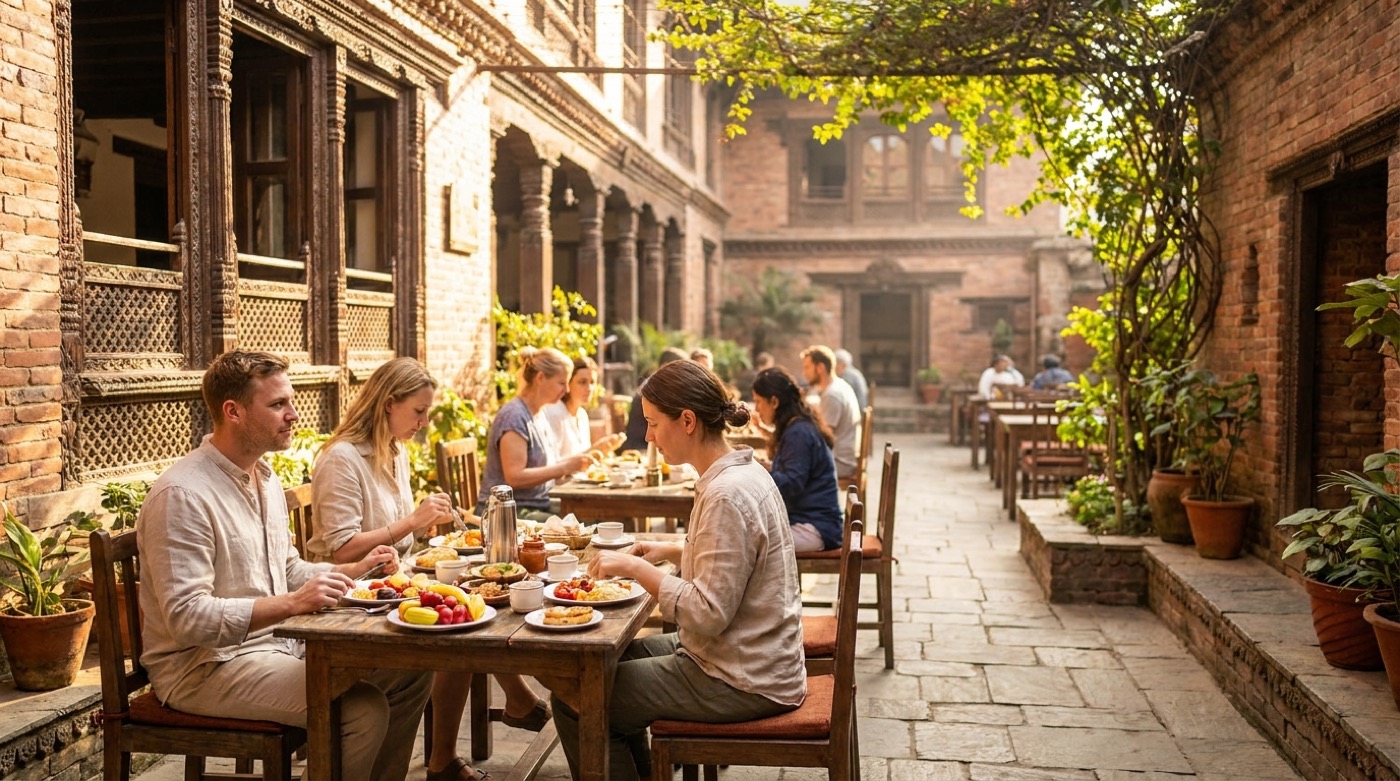
Booking.com, Agoda, and similar platforms bring valuable visibility, but the commission they take on every booking adds up quickly for a hotel with tight margins. Good hotel marketing in Nepal does not mean abandoning OTAs; it means building enough of a direct relationship with guests that a meaningful share of bookings come straight to you instead.
This guide covers practical ways hotels in Kathmandu, Pokhara, Chitwan, and beyond can grow direct bookings without a large marketing budget.
Why hotel marketing in Nepal should prioritize direct channels
Every booking through an OTA is a guest relationship the OTA owns, not you. You often cannot email them directly, remarket to them, or invite them back without going through the platform again. A guest who books directly — through your website, WhatsApp, or a phone call from seeing your Instagram — becomes a relationship you control, one you can invite back for their next trip or their friend's recommendation.
Building the content that makes guests want to book directly
- Room and property tours: honest photos and short videos of actual rooms, not overly edited stock-style shots.
- Local experience content: a short reel of the view from the rooftop, a nearby trail, or the breakfast spread builds desire beyond just "a place to sleep."
- Staff and hospitality moments: guests remember how they were treated; showing this on social media builds trust before arrival.
- Seasonal offers: Dashain and Tihar homecoming packages, wedding season group bookings, or New Year (Baisakh) getaway deals.
- Guest reviews (with permission): sharing a genuine guest's comment, with their consent, adds credibility no ad copy can match.
For example, a hotel in Pokhara could post a short video every Friday showing the lake view from a different room category, tagging it with the direct booking contact number or website link in the caption.
Making direct booking genuinely easier than the OTA
Guests often default to OTAs simply because booking there feels fast and safe. To compete, your direct channels need to be at least as easy:
- Keep your phone number and WhatsApp visible on every social post and your Google Business Profile.
- Respond to booking inquiries within minutes where possible — slow replies push guests back to the OTA "book now" button.
- Offer a small, honest incentive for direct bookings, such as a complimentary breakfast or early check-in, clearly explained.
- If you have a website, make sure the booking or contact process takes fewer steps than searching for you on Booking.com.
A simple hotel website with clear rates, photos, and a WhatsApp or call-to-book button often converts better than expected, especially for repeat guests who already trust your property.
Handling inquiries after hours
A large share of booking inquiries come in the evening when potential guests are researching their trip. If your front desk cannot monitor Instagram DMs and Facebook Messenger around the clock, an AI auto-reply setup can confirm availability questions, share your rates, and pass on serious inquiries to staff the next morning — keeping guests engaged instead of losing them to silence.
Never guarantee "best price" language you cannot honor — if your OTA rate is occasionally lower due to a platform promotion, be transparent about it rather than making a blanket claim.
Using Facebook and Instagram ads to fill low season
Nepal's tourism has clear seasonal patterns. During slower months, a small boosted post targeting nearby cities or diaspora audiences planning a homecoming trip can help fill rooms that would otherwise sit empty. Budgets from रु 1,000 can be tested on a specific offer — for example, a Dashain family package — before scaling up what works.
Google Business Profile as your strongest free tool
Many travelers search a destination and hotel name directly on Google Maps before ever visiting an OTA. A complete, regularly updated hotel profile with accurate photos, current rates or a "call for rates" note, and genuine guest reviews often influences the decision as much as any paid ad.
Balancing OTAs and direct marketing realistically
This is not about cutting ties with OTAs — they still bring first-time visibility, especially for international travelers unfamiliar with your property. The goal is a healthier mix: let OTAs bring new guests in, and use consistent social media, a simple website, and fast responses to convert repeat guests and referrals into direct, commission-free bookings.
GrowthHub helps hotels and resorts across Nepal build exactly this kind of direct-booking presence — from content that shows off your property honestly to managing inquiries so no potential guest waits too long for a reply. Get a free audit of your hotel's social pages to see where you are losing direct bookings to OTAs today.
Frequently asked questions
Should a small hotel stop using OTAs entirely?
Not usually. OTAs still bring valuable first-time visibility, especially from international travelers. The goal is to build enough direct channels to reduce commission dependence, not eliminate OTAs.
What is the fastest way to start getting direct bookings?
Make your phone number and WhatsApp visible everywhere — social posts, Google Business Profile, and any website — and respond to inquiries quickly, since speed often matters more than price.
Can small hotels compete with big resort marketing budgets?
Yes, especially on social media, where authentic, honest content about the property and fast guest responses often outperform generic, expensive-looking ads from larger competitors.
🏨 See our hotels & resorts marketing →
Related articles.

How to Choose a Digital Marketing Agency in Nepal
What to actually look for when hiring a digital marketing agency in Nepal, from real deliverables to fair pricing, without the sales talk.
Read article →
Social Media Marketing in Nepal: A Practical Guide
Everything a busy Nepali business owner needs to get started with social media marketing, from choosing platforms to planning a month of content.
Read article →
AI Marketing for Nepali Businesses: A Practical Starting Point
A grounded look at how AI marketing actually helps Nepali businesses today, without the hype, plus what still needs a human touch.
Read article →